
How to Wash Large Pillows Without Ruining Them

A king pillow that has gone flat, a body pillow with a mystery mark, or a big decorative cushion that will not fit in the home washer can turn a simple laundry day into a headache. Knowing how to wash large pillows comes down to two things: what the pillow is filled with, and whether the machine has enough room for it to move freely.
A cramped wash can leave detergent trapped inside, strain a domestic machine and produce a pillow that is still damp in the middle. Give bulky bedding the space it needs and the job becomes much easier - fresher pillows, cleaner covers and no wrestling with a soaked bundle in your laundry.
Check the label before anything else
The care label is the best place to start. It tells you whether the whole pillow can be machine-washed, should be hand-washed, or needs dry cleaning. Remove pillowcases, protectors and removable outer covers first. These can usually be washed separately using their own care instructions.
Most polyester-filled pillows and many feather or down pillows can be washed in a machine. Memory foam, latex foam and some specialty ergonomic pillows usually cannot. Water can damage their structure, make them crumble or leave them impossible to dry properly. For these, spot-clean stains with a lightly damp cloth and mild detergent, then allow plenty of time to air dry away from direct heat.
If the label is missing, inspect the filling and seams. A foam pillow feels solid and springy rather than fluffy. A feather or down pillow feels soft, light and unevenly filled. Polyester pillows tend to feel smooth and springy, with a more even fill. When in doubt, avoid a full wash until you can confirm the filling type.
Before washing, check for split seams, loose stitching or small holes. A tiny opening can become a machine full of feathers or fibre fill. Mend damage first, and pre-treat obvious marks with a small amount of gentle laundry detergent. Do not soak the pillow for hours. Too much water sitting in the filling makes drying slower and can encourage odours.
When a home machine is not big enough
Large pillows need room to circulate through the water. If you have to squash one into your washer or force the door shut, it is too big for that machine. The same goes for a washer that is already carrying a load of sheets or towels. Overloading reduces cleaning performance and can throw the drum off balance during the spin cycle.
A larger commercial washer is a practical option for king pillows, body pillows, oversized cushion inserts and several standard pillows at once. The extra drum capacity helps water and detergent move through the filling, then lets the machine spin out more moisture at the end.
At The Wash Stop, the 14kg and 18kg industrial washing machines are built for the bulky household loads that struggle in a standard home washer. Choose a machine with clear space around the pillows rather than filling it to the top. That little bit of room makes a real difference to the wash and rinse.
For a front-loading machine, it can help to wash two similarly sized pillows together to keep the load balanced. With one extra-large pillow, do not add random heavy items just for balance. Follow the machine instructions and use the appropriate load size. The goal is an even spin, not a packed drum.
How to wash large pillows step by step
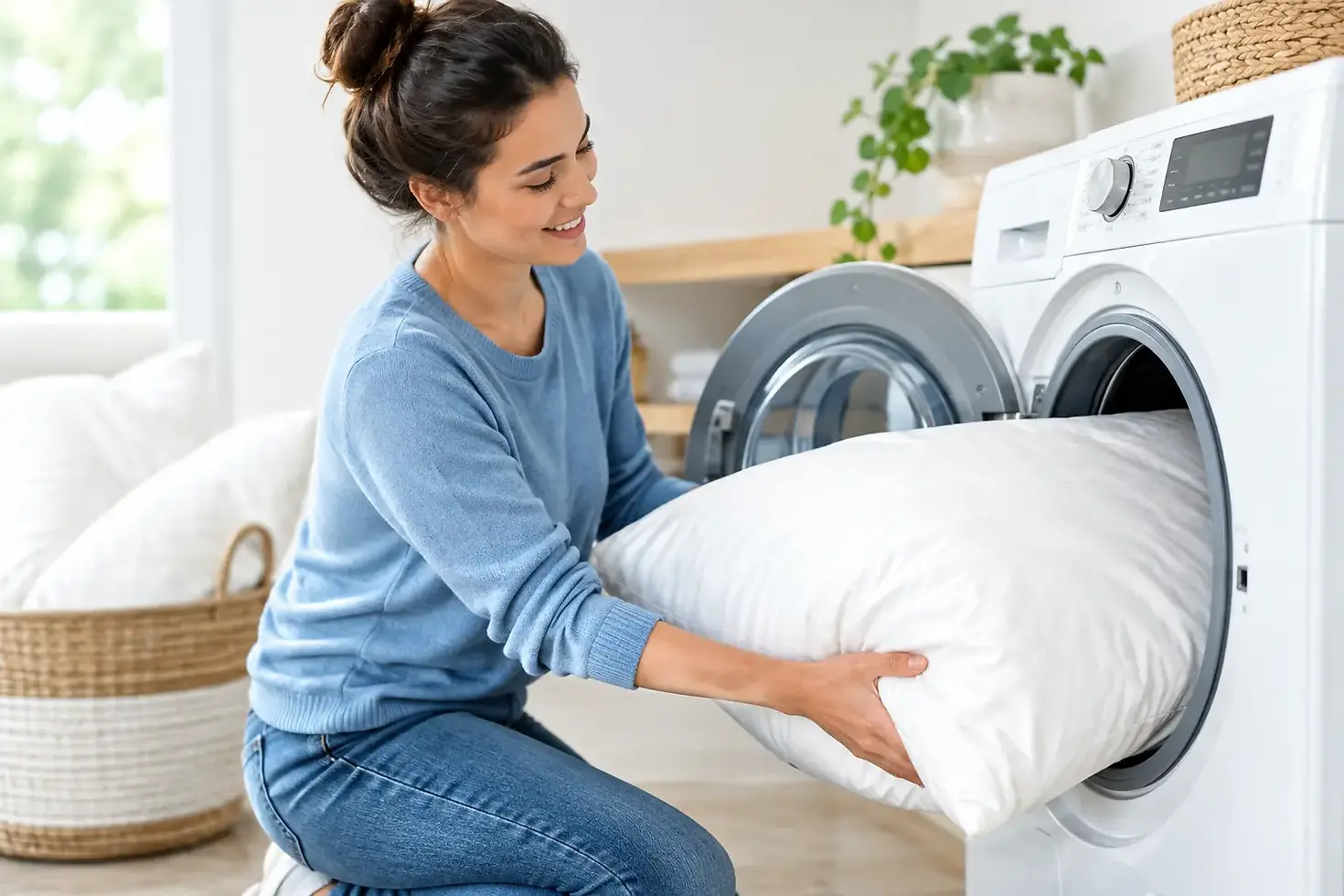
Start by placing the pillow or pillows loosely into the machine. Use a gentle or bulky-items cycle where available, with warm water unless the care label directs otherwise. Hot water can shrink covers, damage delicate filling and make some pillow materials lose their shape.
Use a small amount of liquid, low-suds detergent. Powder can be harder to rinse from thick filling, while too much detergent can leave a sticky residue that attracts more dirt over time. Fabric softener is best avoided, especially on down and feather pillows, because it can coat the filling and reduce its fluffiness.
Choose an extra rinse if the machine offers one. Pillows are much thicker than everyday clothing, so rinsing matters. After the wash, press the pillow gently through its cover. It should feel clean and rinsed, not slippery or soapy. If you can see suds or feel residue, run another rinse and spin cycle before drying.
Do not be alarmed if a feather or down pillow looks flat straight after washing. That is normal. The filling needs to be dried completely and fluffed again before the pillow returns to its usual shape.
Washing feather and down pillows
Feather and down pillows need a gentle wash and especially careful drying. Keep the water warm rather than hot, use minimal detergent and select an extra rinse. If the pillow has a down-proof cotton cover, check it carefully beforehand for worn spots and loose seams.
Once washed, tumble dry on low heat. Add clean dryer balls, or clean tennis balls enclosed in white socks, to help break up clumps and restore loft. Check the pillows every 30 to 40 minutes, separating any damp clumps by hand. Down can feel dry on the outside while remaining damp deep in the filling, so allow more time than you think you need.
Washing polyester-filled pillows
Polyester-filled pillows are generally more forgiving. Use a warm, gentle cycle with a modest amount of detergent, followed by an extra rinse. Tumble dry on low to medium heat if the care label allows it, pausing occasionally to shake and reshape the filling.
If a polyester pillow stays lumpy after drying, it may simply be at the end of its useful life. Washing can freshen it, but it cannot restore filling that has permanently compacted or broken down.
Drying is the part you cannot rush
A clean pillow that is not fully dry is not ready for the bed. Moisture trapped in the centre can create a musty smell and, in the worst case, mildew. Large pillows often need several dryer cycles, particularly in humid weather or when they have dense filling.
Use a low heat setting for down, feather, foam-like fibre fill and delicate covers. High heat may scorch fabric, shrink the cover or damage the fill. Polyester may tolerate medium heat when the label permits, but low and steady is still the safer choice for most pillows.
Between cycles, take the pillows out and squeeze them in several places. Feel along the centre, corners and thicker seams. They should feel evenly dry, light and fluffy - not cool, heavy or clumped. Break apart any damp sections with your hands, then return the pillow to the dryer.
Air drying can work for some machine-washable pillows, but it takes much longer and needs good airflow. Place the pillow flat on a clean drying rack, turn it regularly and fluff the fill every few hours. Avoid leaving it in a damp, shaded spot or hanging it by one edge, which can pull the filling out of shape.
Common mistakes that make pillows worse
The biggest mistake is putting a bulky pillow into a machine that is too small. Even if the cycle starts, the pillow may not rinse properly or the machine may struggle to spin. A larger washer gives the load room to clean properly without putting unnecessary pressure on your home appliance.
Another common issue is using too much detergent. More detergent does not mean a cleaner pillow. It usually means more rinsing, more residue and a pillow that feels stiff once dry. Stick to a small dose and prioritise the extra rinse.
Finally, do not put a pillow back on the bed because the surface feels dry. Check right through the filling first. If you are unsure, give it more dryer time. It is far easier to dry a pillow for another cycle than deal with a stale-smelling pillow a few days later.
Large pillows do not need special treatment every week, but a proper wash once or twice a year can make a noticeable difference. Use a pillow protector between washes, fluff pillows regularly and act early on spills or pet marks. A little room in the washer and patience in the dryer will keep your bedding feeling clean, comfortable and ready for a proper night's sleep.


Comments