
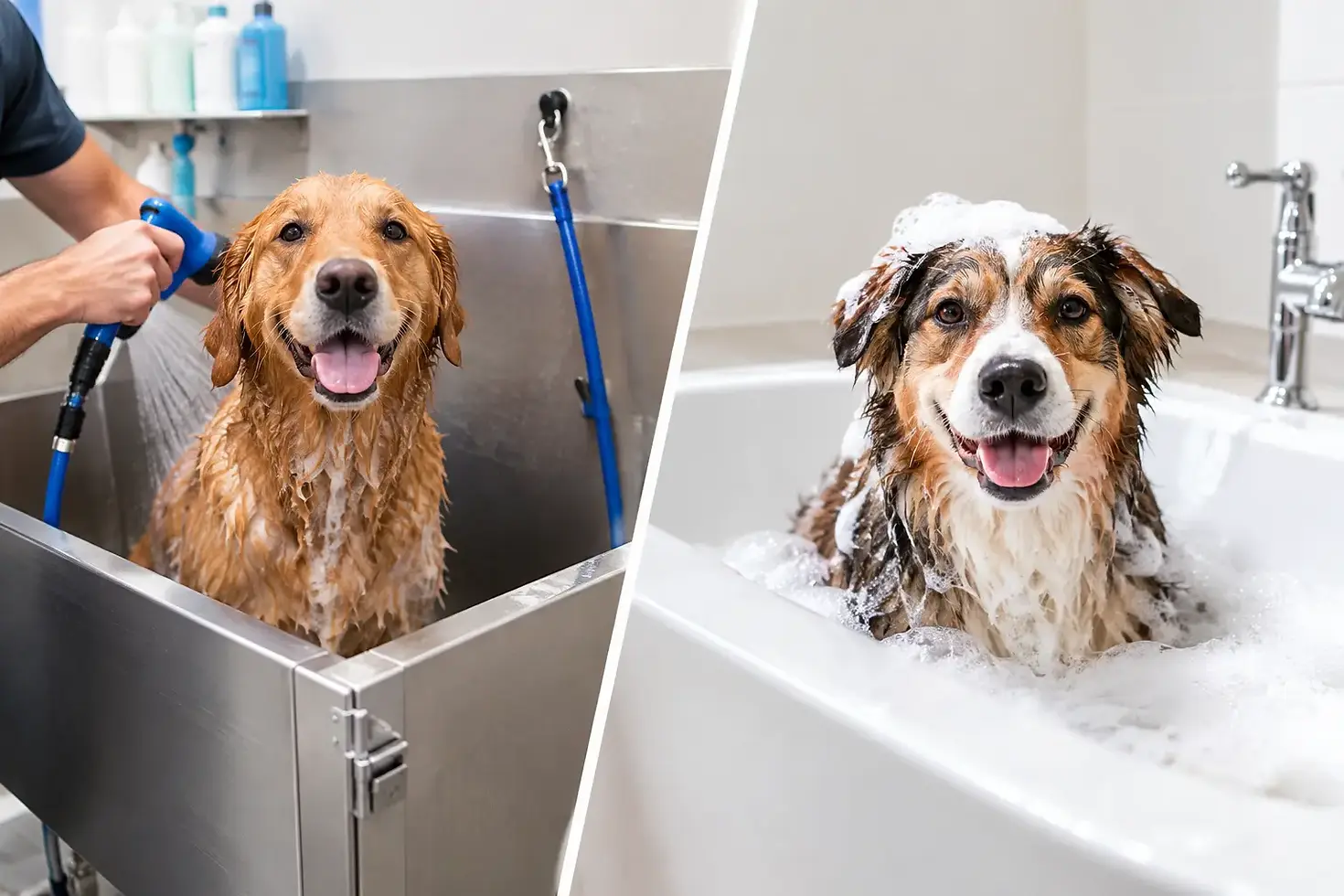
Dog Wash Versus Bathtub: Which Works Best?

A wet dog doing a full-body shake beside the shower is enough to settle the dog wash versus bathtub debate for plenty of local pet owners. Home baths can work well for a small, calm puppy after a light splash in the yard. But for a muddy retriever, a long-haired dog or a regular wash day, the setup matters as much as the shampoo.
The best choice depends on your dog’s size, coat, temperament and how much cleanup you are willing to take on afterwards. Here is how a purpose-built self-service dog wash compares with the bathtub at home.
Dog Wash Versus Bathtub: The Real Differences
A bathtub is familiar, private and available whenever you need it. You already have towels nearby, and for some dogs, the routine feels comfortable because it happens in their own home. If your dog is small enough to lift safely and only needs an occasional wash, it may be all you need.
A dedicated dog wash is designed around the parts of bathing that tend to make home washing difficult: getting the dog into position, controlling water temperature, rinsing a thick coat properly and drying them before they soak the whole house. The wash bay keeps the job contained, with equipment made for dogs rather than people.
Neither option is automatically right for every wash. A clean, short-haired dog may be easy to manage at home. After a beach run, bushwalk or muddy morning at the park, professional-grade equipment can turn a drawn-out bathroom chore into a much simpler stop.
Setup and Safety for You and Your Dog
The biggest difference is often the lift. Getting a small dog into the tub is one thing. Lifting a large, wriggly or older dog over the side of a bathtub can strain your back and leave both of you unsettled. Once they are in, there is limited room to move around them, especially in a compact bathroom.
A dog wash bay gives your puppy a dedicated space at a practical working height. That makes it easier to reach under the belly, wash paws and rinse around the chest without crouching on the bathroom floor. It is also useful for older owners, bigger dogs and anyone trying to avoid a slippery lift.
At home, non-slip mats can help, but wet bathroom tiles, soap residue and a dog keen to exit are not an ideal mix. In a dog wash, the enclosed bay is built for splashes and shake-offs. You can focus on keeping your dog calm rather than protecting every surface around you.
Of course, some dogs are anxious in unfamiliar places. If yours is particularly nervous, start slowly. Bring them in for a short visit, offer calm reassurance and keep the first wash brief. Familiar treats and a steady voice go a long way. A self-service wash should feel practical, not rushed.
Water Temperature and Rinsing Make a Difference
Bathwater can be hard to get right. A bathroom tap may run hot at first, then turn cool halfway through. Meanwhile, the dog is standing in pooled water that quickly becomes sandy, soapy or muddy. It is not always the most pleasant way to clean a coat.
Purpose-built dog wash systems provide warm water through a wash hose, making it easier to direct water where it is needed. You can wet the coat thoroughly, shampoo it, then rinse from the neck down while keeping water away from eyes and ears. That control matters for dense double coats, curly coats and dogs that have collected more dirt than expected.
A thorough rinse is not just about looking clean. Leftover shampoo can irritate skin and make a coat feel dull or sticky. At home, thick fur can hide suds around the chest, under the front legs and near the tail. A strong, easy-to-aim rinse helps you check that the water is running clear.
At The Wash Stop, K9000 dog wash bays include warm water, shampoo and rinse products, so there is less to pack and less chance of discovering an empty bottle halfway through the job. It is a straightforward setup for a regular wash or a serious post-adventure clean.
The Drying Test: Where Home Baths Get Messy
Most dogs tolerate the wash better than the drying. A couple of household towels can remove surface water, but they quickly become heavy and soaked. Then comes the familiar sprint down the hallway, the couch jump or the shake beside the clean laundry basket.
High-velocity blow-drying is one of the clearest advantages of a dedicated dog wash. It pushes water out of the coat rather than simply warming it on the surface. This is especially helpful for larger dogs, long-haired breeds and double-coated dogs that seem dry on top but stay damp underneath for hours.
Drying also gives you a chance to inspect the coat. You may notice a grass seed, tangled fur, a small scratch or a patch of irritated skin that was hard to see when everything was wet. Keep the dryer moving, avoid sensitive areas and let your dog take short breaks if they are new to the noise.
A home hair dryer is usually slower and less practical for a full coat. It can also overheat if held too close. If towel drying is your only option, plan for extra time and keep your dog off beds and rugs until they are properly dry.
Cleanup, Drainage and the Rest of Your Day
The bathtub option does not end when your dog is clean. There is usually fur in the drain, muddy water around the tub, wet towels to wash and splashes on walls, cupboards and the floor. For renters or households sharing one bathroom, that cleanup can be the most frustrating part.
A dog wash keeps the fur, dirt and water away from your bathroom. You leave with a cleaner dog and no blocked drain to tackle at home. For owners of dogs that shed heavily, that alone can make the trip worthwhile.
It can also be a smart way to combine jobs. If bulky dog towels, blankets or bedding need attention after the wash, handling them in an industrial-capacity machine during the same visit saves another errand. Easy parking, card and mobile payments, and no appointment requirement help keep the stop simple when your weekend is already full.
Cost Is More Than the Price on the Screen
Bathing at home can appear cheaper because you are using what you already have. But it still uses water, hot water, dog shampoo and plenty of towels. Add the time spent cleaning the bathroom and washing those towels, and the value calculation changes.
A self-service dog wash has a clear per-use cost, which can be easier to plan for. The shampoo, rinse, warm water and dryer are already part of the setup, so you are not constantly replacing supplies or trying to make do with equipment that was never made for wet fur.
For an occasional small-dog wash, the bathtub may still be the sensible choice. For regular cleaning, big coats, muddy paws and households short on time, paying for a well-equipped wash bay can be money well spent. It sits between a home bath and a full grooming appointment: more capable than the tub, without the cost or scheduling of a groomer.
Choosing the Right Option for Your Dog
Choose the bathtub when your dog is small, comfortable at home, lightly dirty and easy to towel dry. It is also handy for quick spot cleaning, such as rinsing off a little mud from paws or removing something unpleasant from one area of the coat.
Choose a dog wash when your dog is large, extra fluffy, very muddy or likely to shake water through the house. It is often the easier option after the beach, a rainy walk, a day at the oval or any outing that leaves more dirt in the coat than you want in the bathroom drain.
Whatever you choose, keep the experience calm. Use dog-safe products, check water temperature before starting, protect their ears and reward cooperative behaviour. A regular wash routine is easier for everyone when your dog learns that clean fur is followed by praise, a treat and a comfortable trip home.
A fresh dog should not have to mean a wet bathroom and a pile of soggy towels. Pick the setup that suits your dog, your home and the day you have ahead - then get back to the good part: a clean, happy pup ready for the next adventure.


Comments